
VO₂ Max Testing
Measure your aerobic capacity.
Train smarter.
Unlock your performance potential.
VO₂ max testing is the gold standard for evaluating cardiovascular fitness. Using lab-grade metabolic testing and respiratory analysis, we measure how your body takes in, transports, and utilizes oxygen — so you can train in the right zones, improve endurance, and track progress over time.
Key Benefits
Maximize Endurance
Identify your true aerobic capacity and improve stamina.

Train Smarter
Get precise training zones tailored to your physiology.

Optimize Energy Use
Understand how your body uses carbs and fat for fuel.

Track Progress
Measure improvements over time with objective data.
Personalized Guidance
Receive actionable recommendations to reach your goals.
What We Measure
VO₂ Max
Your maximum aerobic capacity and oxygen-use potential.
Aerobic Threshold
Where sustainable aerobic work begins to shift upward.

Anaerobic Threshold
Where high effort becomes harder to sustain.
Respiratory Exchange Ratio
How your body shifts between fat and carbohydrate use.

Heart Rate Response & Zones
How your cardiovascular system responds to increasing demand.

Calories & Fuel Use
Energy expenditure and substrate use across exercise intensity.
Who It’s For
Endurance Athletes
Runners, cyclists, triathletes, swimmers, and anyone training for sustained output.
Hybrid & Tactical Athletes
For people balancing strength, conditioning, recovery, and real-world work capacity.
Fitness Enthusiasts
For anyone who wants clearer training zones and a more objective fitness baseline.
Fat-Loss & Conditioning Clients
Use intensity zones and fuel-use data to guide smarter cardio decisions.
Performance & Longevity
Track aerobic fitness as a meaningful marker of resilience and long-term health.
Baseline Testing
Establish your performance starting point.
WHAT TO EXPECT
Step 1

Check In
We review your health history, goals, and test readiness.
Step 2
Equipment & Warm-Up
We fit the metabolic mask, explain the protocol, and guide your warm-up.
Step 3
The Test
You exercise through a progressive treadmill or bike protocol while breath and heart-rate data are collected.
Step 4

Report Review
We walk through your VO₂ max, thresholds, training zones, and next steps.
Your Results & Insights
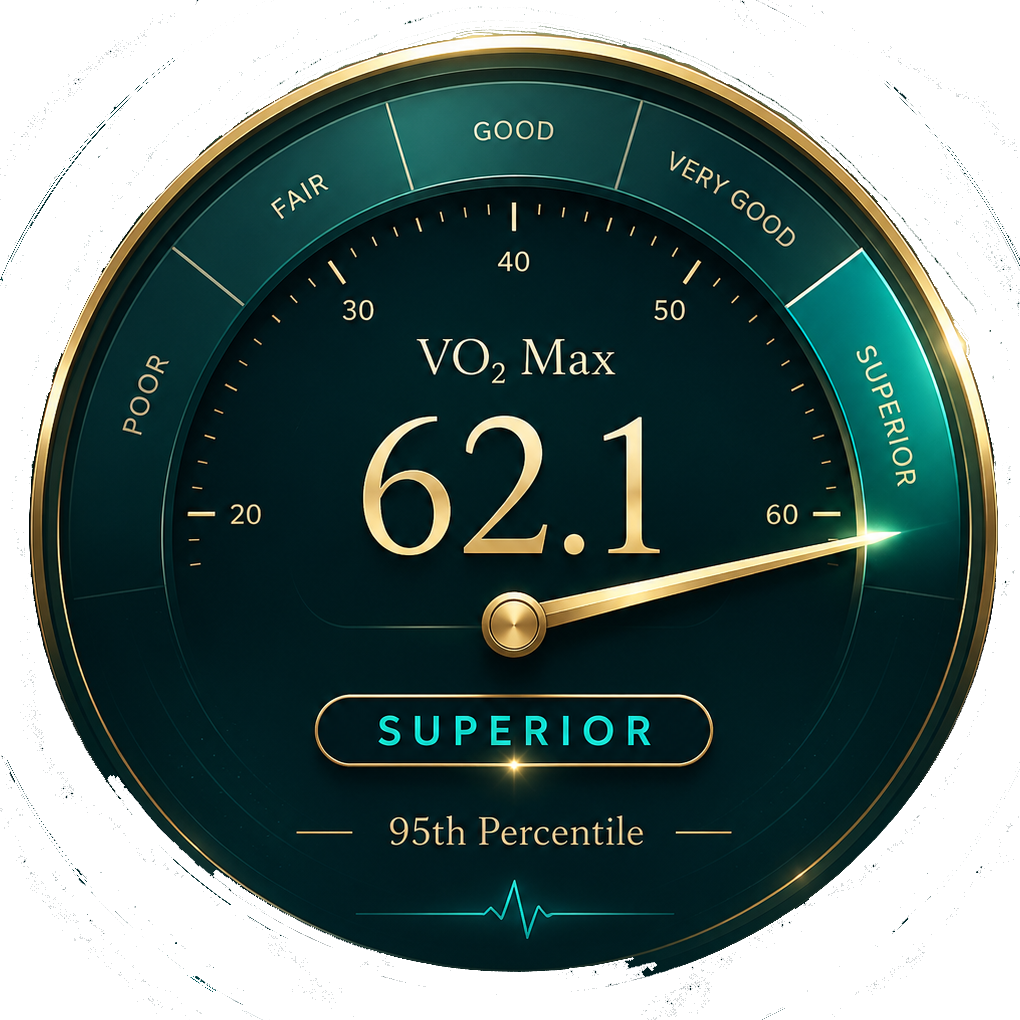
(Example)
VO₂ Max
62.1
ml/kg/min
Superior
95th Percentile
You’ll Receive:
- Personalized training zones
- Threshold interpretation
- Fuel utilization insights
- Training recommendations
- Trackable benchmarks for progress
Why Test With DXABOLICS

Lab-Grade Testing
Clinical-grade metabolic testing equipment and calibrated protocols for accurate results.

Expert Analysis
Interpretation by experienced professionals who turn data into direction.

Actionable Results
Clear guidance you can use to train, recover, and perform better.

Safe & Supervised
Testing in a clean, supervised, and supportive environment.
HOW TO PREPARE

Wear Exercise Clothing and Appropriate Footwear
Come in athletic clothing and supportive shoes suited to treadmill or bike testing — you’ll be working at a hard, sustained effort, so freedom of movement matters.

Avoid Caffeine, Nicotine, and Alcohol for 4-6 Hours Beforehand
Limit or avoid caffeine, nicotine, and alcohol for at least 4-6 before your test — all three can alter your heart rate and perceived effort, which can skew your results in either direction.

Eat a Light Meal 2–4 Hours Beforehand
Arrive normally hydrated and avoid a heavy meal right before testing — but don’t arrive fasted either. A light meal 2–4 hours beforehand helps maintain stable blood sugar during near-maximal effort and keeps the test safe and accurate.

Avoid Hard Exercise 24 Hours Beforehand
Skip intense or strenuous workouts for about 24 hours before your test; residual fatigue can limit how hard you’re able to push, which would understate your true aerobic capacity.

Get a Normal Night’s Sleep Beforehand
Aim for your usual night’s sleep before testing. Poor sleep can reduce your ability to sustain maximal effort, which can understate your true fitness.

Continue Your Regular Medications (Unless Recommended Otherwise in Advance)
Keep taking any prescribed medications as normal unless your healthcare provider has specifically told you to stop. Let us know what you’re taking — certain medications can affect your heart-rate response during testing.

Reschedule If You’re Feeling Unwell or Recently Injured
If you’re feeling sick, running a fever, or recovering from a recent injury, please reschedule — pushing to near-maximal effort under these conditions isn’t safe and won’t reflect your true capacity.
Frequently Asked Questions (FAqs)
Your Questions, Answered
Ready to discover your aerobic potential?
Get precise data. Train smarter. Track meaningful progress.